
My prostate needs a witness protection program. It hasn’t committed any crimes, but it’s higher up on a target list for prostate cancer—simply because I am a black male.
I first became aware of my prostate’s vulnerability during a lecture on prostate cancer I attended as a medical student. The lecturer began his talk by highlighting risk factors for prostate cancer. He emphasized that black men are 1.6 times more likely to get prostate cancer compared to others. As he said “black men,” he slowly turned towards me—one of few black dudes in the class— and awkwardly stared for several seconds, subconsciously making my prostate feel like it needed some hardcore church “Prayer Warriors.” After further research, I realized two things: there are no witness protection programs for prostates and certain foods may decrease my prostate’s chances of ending up on a “Prayer Bulletin.” September was prostate cancer awareness month, and it’s now October. I may be late, but useful information shouldn’t have a month-long expiration date.
So, let’s talk about some prostate facts, the role of foods in prostate cancer prevention, and a delicious prostate-friendly recipe.

Black men are 1.6 times more likely to develop prostate cancer.
Prostate Facts: What is your prostate and what has it done for you lately?
- The prostate is a small gland that surrounds part of the urethra, the little tube that urine travels through before it exits the body. It secretes 30% of the fluid that makes up semen. The liquid the from the prostate helps sperm survive the vagina’s acidic environment, but I would never call the prostate basic (Yes, I’m a true nerd).
- Prostate cancer is the second most common cancer in men the US. Only skin cancer is more common for men. I’m not going to dwell on the ins and outs of prostate cancer—there’s plenty of sites that exist for this purpose. The CDC offers an easy to follow article for prostate cancer awareness.
- Recommendations for prostate cancer screening seem like a hot mess nowadays. I know ‘hot mess’ isn’t a medical term, but I’m just keeping it real. The U.S. Preventive Services Task Force (USPSTF) recommends “individualized decision making about screening for prostate cancer after discussion with a clinician, so that each man has an opportunity to understand the potential benefits and harms of screening and to incorporate his values and preferences into his decision.”
Wait, what? That’s doctor speak for “you should just talk to your doctor because screening may be helpful, but it may be harmful too.” I’ll probably end up getting my PSA check when I’m the appropriate age, but I’m going to keep some prostate cancer-preventing foods on my plate until we come up with something better.
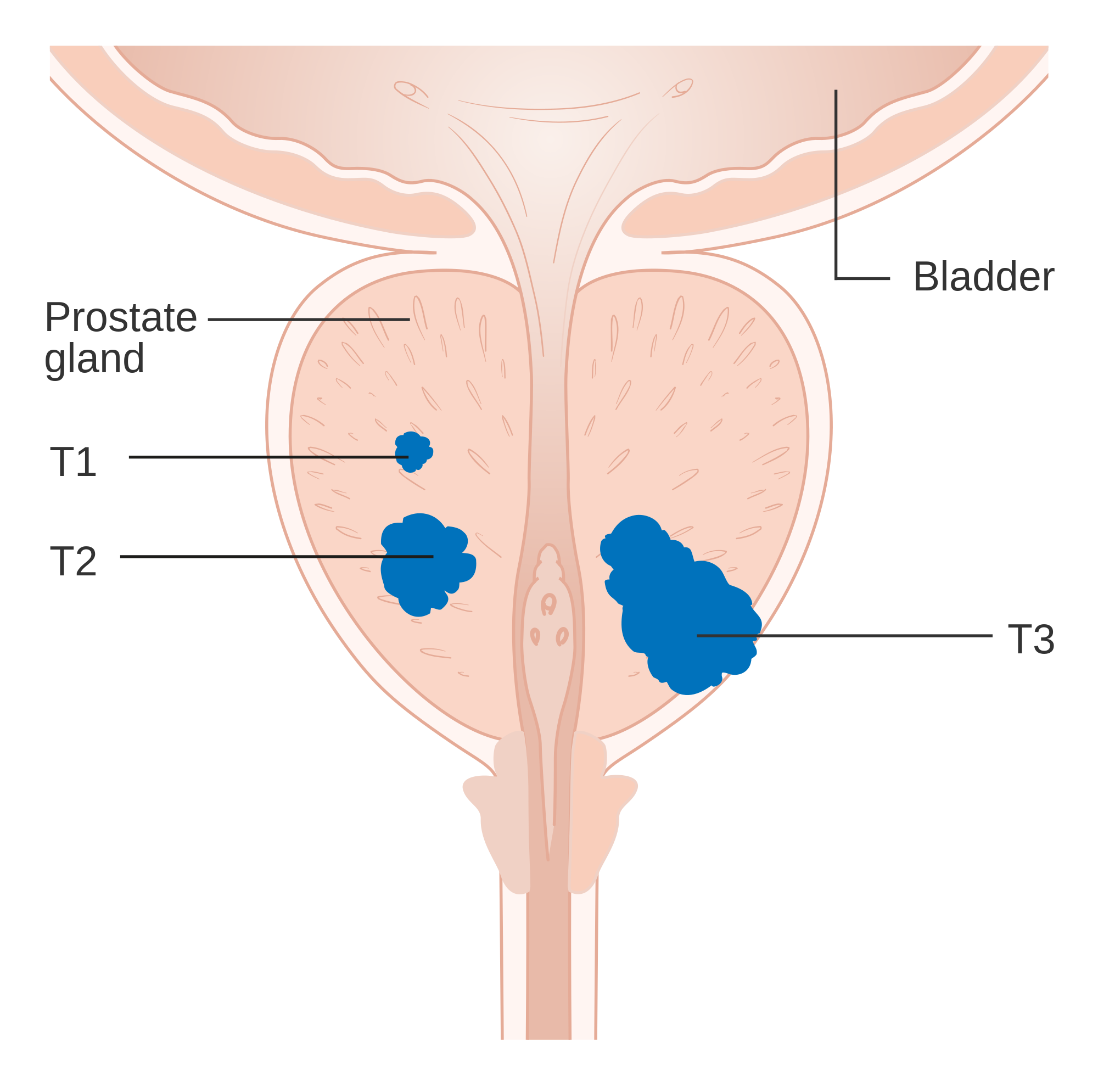
The prostate with examples of prostate cancer
Do certain foods increase the risk of prostate cancer?
It’s not entirely clear which foods increase the risk of prostate cancer. Meat (both processed and unprocessed), fatty foods, carbohydrates, eggs, poultry, and milk are all prime suspects, however reports connecting these foods to prostate cancer are inconsistent (1,2). Several studies do raise a concern for dairy milk, specifically dairy calcium and protein. Recently, an extensive population study from the UK estimated that a 35g per day increase in dairy protein raises the risk of prostate cancer by 32% (3). This is the equivalent of drinking 4-5 cups of whole milk daily. If you are really concerned about your risk for prostate cancer, you may consider decreasing your meat and dairy intake.
Can certain foods lower the risk of prostate cancer?

Sundried Tomatoes
Decreasing the risk of prostate cancer with food is a less controversial topic than foods that increase the risk. Plus, I don’t have to worry about the meat industry coming after me (I definitely don’t have Oprah’s money for lawyers). Essentially, vegetable-rich diets such as vegan and Mediterranean diets may modestly lower the prostate cancer risk due to their profile of vitamins, minerals, and plant-based nutrients known as phytochemicals (4,5). Not all veggies are equal when it comes to lowering the risk of prostate cancer. Here’s a list of foods that may help to cancer-proof your prostate (4,5,6,7,8):
- Lycopene-rich foods: Lycopene is a phytochemical that contributes to the reddish color of certain vegetables. Tomatoes, Watermelon, Guava, Red Peppers, Grape Fruit, and Carrots are a few examples of lycopene-rich foods. If you desperately wishing to find more information about lycopene, check out this review article.
- Cruciferous Vegetables such as broccoli, cauliflower, and cabbages.
- Allium veggies such as onions, garlic, leeks, scallions, and shallots.
- Green Tea.
- Beans and lentils.
- Raisins and Dates (see our recipe for date paste if you trying to figure out how to incorporate dates in your diet).
Again, no food can eliminate the risk of prostate cancer entirely, but these foods may offer some protection. You should talk to your doctor about prostate cancer screening, but I can give you the green light to eat more tomatoes.
Black Bean Quinoa Salad with Sundried Tomatoes and Avocado Vinaigrette: A Recipe for Prostate Protection

Giving out a list of prostate cancer-fighting foods is helpful, but I want to take it a step further by combing some of the foods in a prostate protecting recipe. Time to put my chef coat on over my white coat and try to instill some evidence into a recipe.
I love tomatoes—I eat them like my grandmother was from Tuscany, not Tuskegee. Aside from my love affair with tomatoes, I put them in them recipe because they are the most-studied source of lycopene. I decided to use sundried tomatoes because sundried tomatoes actually have higher amounts of lycopene than raw ones (9). Plus, sundried tomatoes add a meaty umami flavor to plant-based dishes. For those who don’t work with sundried tomatoes often, taking them out of the jar is only preparation they require. The avocados and avocado oil also serve a specific purpose. A recent study demonstrated that avocados and avocado oil both enhance absorption of lycopene from tomatoes(10). The classic combination of avocado and tomato makes perfect sense from a taste perspective, but also from a scientific one. The carrots and the red peppers are both additional sources of lycopene. The beans, onions, and garlic add flavor and some extra prostate protection.
For the record, eating a bunch of tomatoes doesn’t give you license to skip out on your prostate exam. You should definitely have a conversation with your doctor about your prostate and prostate cancer screening options depending on your age and family history. In the meantime, eat right and enjoy recipe below.
[mpprecipe-recipe:3]
Did you learn something today? Show The Doc some love by signing up to receive updates when new posts, recipes, and useful health information are released. You don’t want to miss a thing from The Doc’s Kitchen.
1. Rohrmann S, Platz EA, Kavanaugh CJ, Thuita L, Hoffman SC, Helzlsouer KJ. Meat
and dairy consumption and subsequent risk of prostate cancer in a US cohort study. Cancer Causes Control. 2007 Feb;18(1):41-50. PubMed PMID: 17315319.
2. Wu K, Spiegelman D, Hou T, Albanes D, Allen NE, Berndt SI, van den Brandt PA, Giles GG, Giovannucci E, Alexandra Goldbohm R, Goodman GG, Goodman PJ, Håkansson N, Inoue M, Key TJ, Kolonel LN, Männistö S, McCullough ML, Neuhouser ML, Park Y, Platz EA, Schenk JM, Sinha R, Stampfer MJ, Stevens VL, Tsugane S, Visvanathan K, Wilkens LR, Wolk A, Ziegler RG, Smith-Warner SA. Associations between unprocessed red and processed meat, poultry, seafood and egg intake and the risk of prostate cancer: A pooled analysis of 15 prospective cohort studies. Int J Cancer. 2016 May 15;138(10):2368-82. doi: 10.1002/ijc.29973. PubMed PMID: 26685908; PubMedCentral PMCID: PMC4837898.
7. Aghajanpour M, Nazer MR, Obeidavi Z, Akbari M, Ezati P, Kor NM. Functional foods and their role in cancer prevention and health promotion: a comprehensivereview. Am J Cancer Res. 2017 Apr 1;7(4):740-769.
10. Unlu NZ, Bohn T, Clinton SK, Schwartz SJ. Carotenoid absorption from salad and salsa by humans is enhanced by the addition of avocado or avocado oil. J Nutr.2005 Mar;135(3):431-6. PubMed PMID: 15735074.


Well said and enlightening
Thank you so much
Good article
Thank you. I’m glad you liked it.